 info@london-law.co.uk
 +44 0 207 537 7000
 WhatsApp: +44 0 7311 509 591
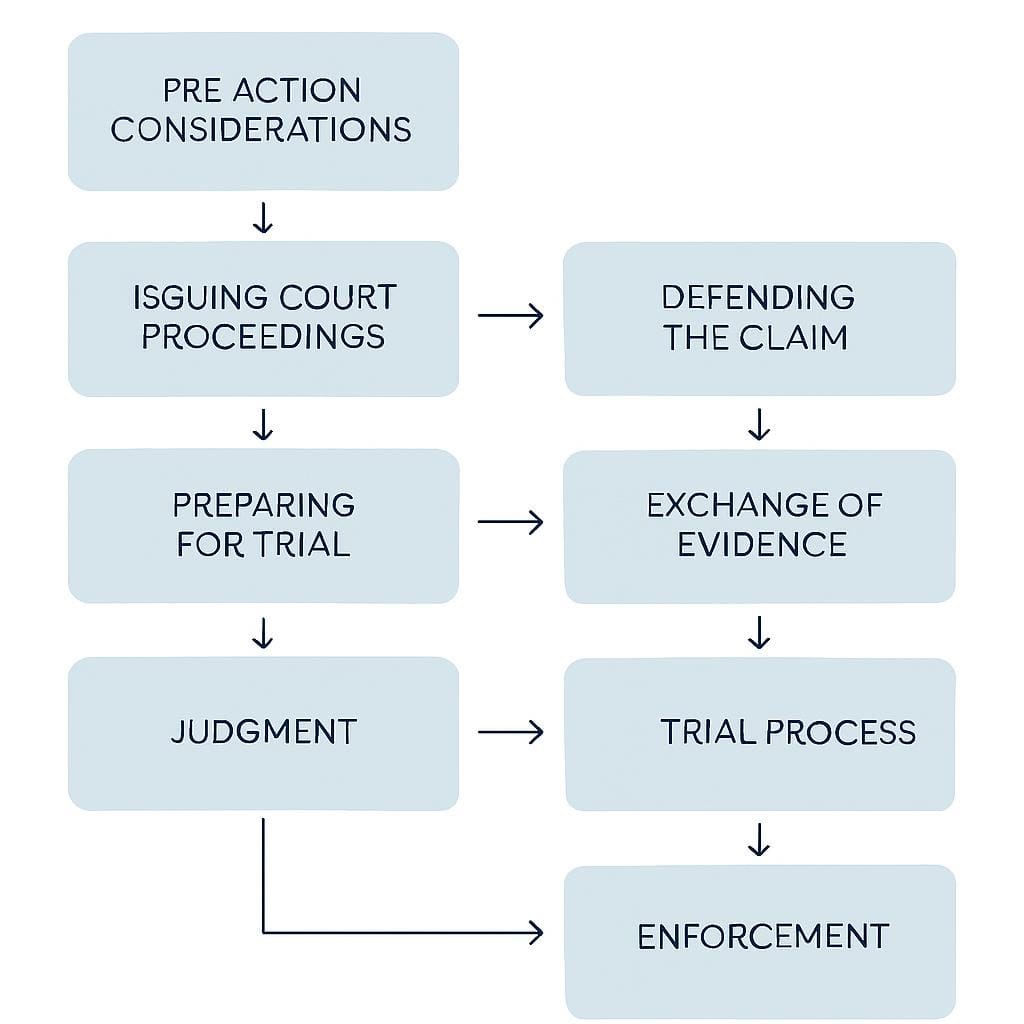
The civil litigation process can be a complex and daunting experience for individuals and organisations alike. By understanding the various stages involved, one can navigate the legal landscape more effectively, whether it is for personal matters or business disputes. This guide aims to demystify the civil litigation process in England and Wales, providing a comprehensive overview from start to finish.
What is Civil Litigation?
Civil litigation refers to the legal process where parties resolve disputes through the judicial system. This can encompass a wide array of issues, including contract disputes, property disputes, personal injury claims, and more. Unlike criminal cases, civil cases focus on compensating the wronged party rather than punishing the offender.
The Key Stages of Civil Litigation
1. Pre-Action Considerations
Before initiating formal proceedings, the parties must engage in pre-action considerations. This stage encouragesResolution without resorting to litigation, which can be time-consuming and costly.
Pre-Action Protocols
Parties must comply with the relevant pre-action protocols designated by the Civil Procedure Rules (CPR). These protocols provide guidance on the conduct expected from parties before court action. Good practice typically includes:
– Exchanging relevant information and documents
– Attempting to settle the dispute through negotiation or mediation
– Providing a letter of claim outlining the nature of the complaint, the facts, and the remedy sought
Failure to comply with these protocols can affect a party’s position in subsequent litigation.
2. Issuing Court Proceedings
If pre-action attempts fail, the claimant may issue court proceedings by filing a claim form. This document outlines the details of the dispute and the relief sought.
The Claim Form
The claim form should include:
– The names and addresses of the parties
– The basis for the claim
– The remedy sought
– Relevant facts supporting the claim
Once the claim form is completed, it is submitted to the relevant court along with the appropriate fee.
3. Serving the Claim
After the claim form is issued, the claimant must serve it on the defendant. This means delivering a copy of the claim form and any accompanying documents. The defendant has a set period, usually 14 days, to respond to the claim.
Acknowledgment of Service
Upon receiving the claim, the defendant can acknowledge service, indicating that they have received the claim and intend to respond. This step is crucial for managing timelines and planning further action.
4. Defending the Claim
The defendant has several options when responding to a claim. They can admit the claim, dispute the claim, or file a counterclaim against the claimant.
Filing a Defence
If the defendant disputes the claim, they must file a defence. This document should address the points raised in the claim and outline any legal arguments or factual disputes. It is essential to respond within the specified timeframe to avoid judgment by default.
5. Exchange of Evidence
Once both parties have submitted their respective documents, the next stage involves the exchange of evidence. Each party must disclose documents that support their case, including any witness statements.
Disclosure of Evidence
The disclosure process requires each party to provide any relevant documents in their possession. Non-compliance with disclosure obligations may lead to penalties or adverse inferences in court.
6. Preparing for Trial
As the case progresses, both parties must prepare for trial. This includes finalising witness statements, expert reports, and any other relevant evidence.
Trial Bundles
Parties usually compile trial bundles, which are collections of documents that will be presented at court. These bundles must be organised and contain all essential materials to support each party’s case.
7. The Trial Process
The trial is the heart of the civil litigation process where both parties present their arguments before a judge. The judge listens to the evidence, examines the documents, and may question witnesses.
Presenting the Case
During the trial:
– The claimant presents their case first, followed by the defendant
– Witnesses may be called to provide oral evidence
– The judge hears submissions from both parties
It is essential for both parties to be clear and persuasive in their arguments. The judge will ultimately make a decision based on the evidence presented.
8. The Judgment
Following the trial, the judge will provide a judgment. This document outlines the decision and the reasons behind it.
Types of Judgment
The judgment may include:
– An order for the defendant to pay damages
– A ruling dismissing the claim
– Directions for further proceedings, if necessary
Parties usually receive the judgment in writing, allowing them to understand the implications of the ruling.
9. Appeals
If a party is dissatisfied with the judgment, they may consider appealing the decision. This step involves filing an application for permission to appeal.
Grounds for Appeal
Grounds for appeal can include:
– Errors in the law
– Procedural irregularities
– New evidence that may alter the outcome of the case
It is essential to act promptly, as there are strict time limits for filing appeals.
10. Enforcement of Judgments
Once a judgment is obtained, enforcement may be necessary to ensure compliance. If the losing party fails to adhere to the judgment, the winning party must take steps to enforce the ruling.
Enforcement Options
Options for enforcement include:
– Writ of execution to seize property
– Charging orders on property
– Attachment of earnings orders
The enforcement process can be complex and may require additional court proceedings.
Conclusion
Understanding the civil litigation process in England and Wales is vital for anyone involved in a dispute. By familiarising oneself with each stage, parties can better prepare and increase their chances of a favourable outcome.
Summary of Key Points:
– Civil litigation encompasses legal disputes between parties.
– It involves several stages, beginning with pre-action considerations.
– Court proceedings are initiated by issuing a claim form.
– The defendant must respond, either admitting or denying the claim.
– Both parties exchange evidence to prepare for trial.
– The trial culminates in a judgment delivered by a judge.
– Parties dissatisfied with the judgment may seek an appeal.
– Non-compliance with judgments may require enforcement actions.
This guide serves as a foundational understanding of civil litigation, assisting anyone looking to engage with the legal system effectively. By following the outlined steps and ensuring compliance with legal processes, individuals and businesses can navigate civil disputes more confidently.
At Alexander JLO we have many years of experience of dealing with all aspects of law and will be happy to discuss your case in a free no obligation consultation. Why not call us on +44 (0)20 7537 7000, email us at info@london-law.co.uk or get in touch via the contact us button and see what we can do for you?
This blog was prepared by Alexander JLO’s partner, Peter Johnson on 21st April 2026 and is correct at the time of publication. With decades of experience in almost all areas of law Peter is happy to assist with any legal issue that you have. He is widely regarded as one of London’s leading lawyers. His profile on the independent Review Solicitor website can be found Here